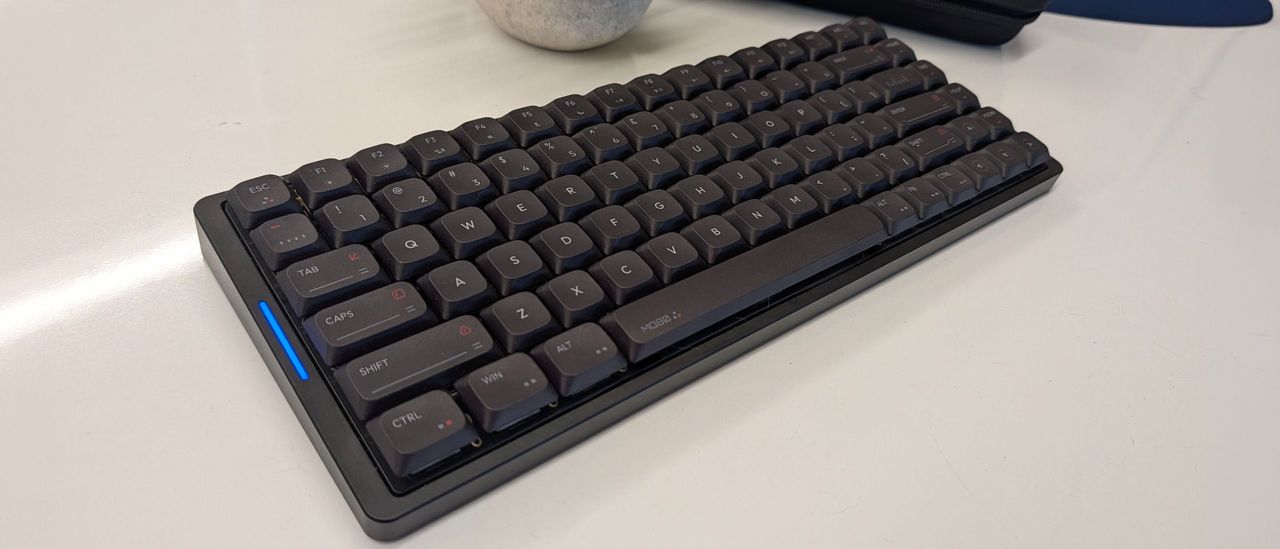
A review of IQUNIX's MQ80 low-profile board lands on a telling verdict: still well-built and attractive, but no longer an automatic buy, with magnetic switches cited as the reason to hesitate.
The real story sits underneath that single product. For years the premium mechanical keyboard market competed on build quality, materials, and aesthetics. Magnetic Hall-effect switches change the terms of competition by adding adjustable actuation, rapid-trigger behavior, and per-key tuning that traditional mechanical switches cannot match in firmware. That reframes a well-made conventional board from a default recommendation into a niche pick for buyers who specifically dislike the feel of magnetic switches. The commercial consequence is margin pressure: makers who built their brand on fit and finish now have to justify a price premium against a feature category that is still getting cheaper. Expect more boards to be priced for sales rather than full retail, and expect the enthusiast conversation to move from keycaps and cases toward switch technology and software.
For the Japanese market the dynamics are sharper than elsewhere. Japan has one of the deepest enthusiast keyboard cultures anywhere, with strong communities around custom builds, group buys, and specialty retailers, so switch-level differentiation travels fast through word of mouth and resale value. A weak yen also raises the landed cost of imported premium peripherals, which makes the "wait for a sale" calculus even more pronounced for local buyers and narrows the window in which a non-magnetic flagship can command full price.
For Japanese enterprises, SIers, and development teams, the takeaway is procurement discipline rather than hype. Input hardware is a genuine productivity tool for engineers who type all day, but it is also an area where standardized bulk purchasing and total-cost thinking matter. The lesson here is to treat switch technology as a spec that will keep shifting, avoid locking large orders into a single generation of hardware, and let individual developers choose feel where budgets allow while central IT standardizes on supportability, durability, and layout consistency. Peripheral strategy is low-stakes next to cloud or AI spend, yet it is a visible, low-cost signal of how seriously an organization treats its engineers' daily working environment.




