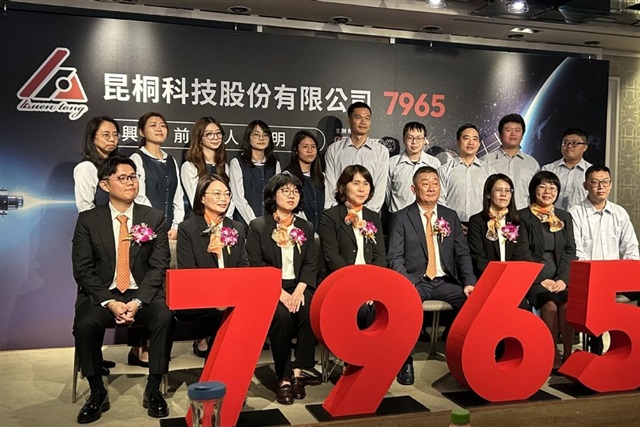
Kuen Tong Technology, a Taiwanese precision metal components maker supplying a US low-Earth-orbit satellite operator, lists on the TPEx Emerging Board at a NT$390 (about US$12.03) reference price, with plans for Thai capacity in 2027 and moves into AI server liquid cooling and semiconductor equipment.
The strategic signal sits beneath the IPO mechanics. Two of the decade's largest hardware buildouts, satellite constellations and AI datacenters, both run on precision-machined metal that few firms can produce at the required tolerance and volume. A supplier that can straddle satellite structural parts and server cold plates is positioning itself at the intersection of two demand curves that are unlikely to peak at the same time, which smooths the cyclicality that usually punishes single-end-market component vendors.
The AI cooling pivot is the more consequential bet. As rack power densities climb, air cooling is giving way to direct-to-chip liquid systems, and the bottleneck shifts from chips to the manifolds, cold plates, and precision fittings that move heat. These are machining problems, not silicon problems, and they hand pricing power to firms with metalworking depth. The planned Thai expansion also reads as textbook geographic derisking: customers building both constellations and datacenters increasingly demand a supply base outside a single jurisdiction.
For Japan, this is a direct competitive signal to the country's precision-machining base. Japanese SMEs own world-class tolerances but have been slow to convert that into the liquid-cooling component franchise now forming around AI datacenters. The window to supply cold plates and fluid hardware is opening while standards are still unsettled; waiting cedes it to Taiwanese and Thai capacity.
For Japanese SIers and datacenter operators, the lesson is that AI buildout plans must now treat cooling supply chains as a scheduling risk, not a procurement afterthought. Firms designing GPU clusters for domestic clients should qualify multiple liquid-cooling component sources early, and investors should watch whether Japan's machining sector moves from parts-for-cars toward parts-for-compute before the supplier roster hardens.




