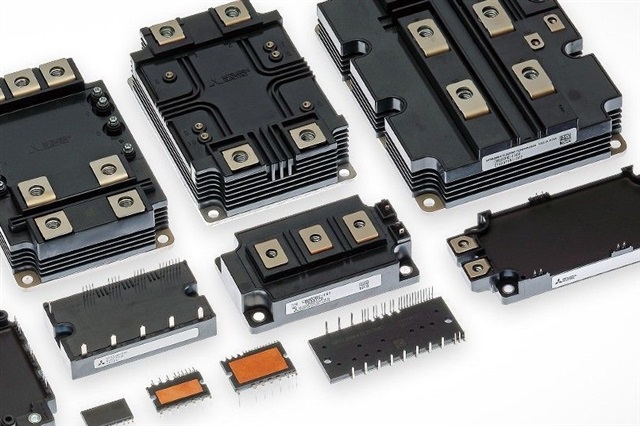
The three-way effort to consolidate Japan's power semiconductor base has slipped past its intended timeline, with governance disputes and a demand surge from AI infrastructure complicating what was pitched as a defensive scale play. The stall is less a failure of will than a sign that the strategic premise shifted mid-negotiation.
Globally, power semiconductors sit at the center of the AI buildout. Datacenters running dense GPU clusters need vastly more efficient power delivery, and the move toward silicon carbide and gallium nitride is reshaping who matters in the supply chain. Infineon, STMicroelectronics, and onsemi have been consolidating fabs and locking in long-term SiC supply, while Chinese makers are scaling aggressively on price. When these three Japanese firms began talking, the thesis was consolidation to survive a commoditizing market. But AI power demand has made the segment attractive again, which weakens the incentive to merge. Why fold your business into a joint entity when your standalone order book is suddenly growing? That reversal, more than any boardroom ego, is the real friction.
The risk for Japan is that hesitation becomes structural disadvantage. SiC capacity is a years-long capital commitment, and the window to secure wafer supply, tooling, and automotive design wins is now. Fragmented players negotiating governance details are not placing those bets. Meanwhile, competitors treat 2026 as a land-grab year.
For Japanese enterprises and the SIer ecosystem, the implications run deeper than chip branding. Power semiconductors underpin EV platforms, industrial automation, and the datacenter power stack that every cloud migration quietly depends on. If domestic supply consolidates slowly or inconsistently, Japanese automakers and factory-automation vendors face a choice between longer qualification cycles with local suppliers or deeper reliance on foreign SiC sources. SIers building smart-factory, energy-management, and EV-adjacent systems should assume component roadmaps from these three vendors stay uncertain through the negotiation period and design for supplier flexibility rather than betting on a single consolidated roadmap.
The broader lesson for Japanese industrial strategy is familiar: coordinated consolidation looks compelling in a downturn and dissolves in an upturn. METI-backed restructuring works best when the market is weak enough to force cooperation. AI demand has removed that pressure, and with it, much of the glue. Watch whether the parties pivot from full integration toward narrower joint ventures on SiC capacity, which would be the more realistic path to scale without surrendering independence.




