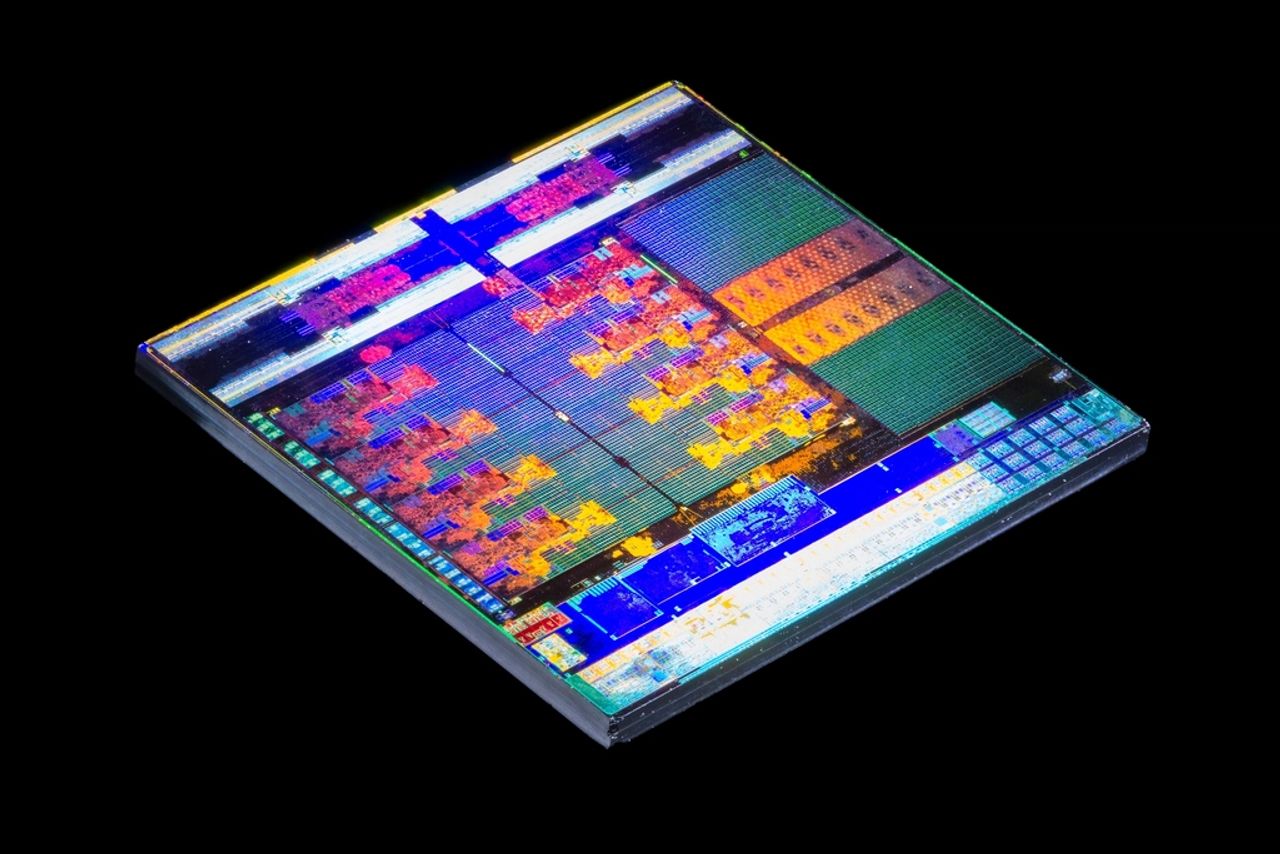
Leakers put Nova Lake at up to 20% higher gaming performance than Arrow Lake, with a 17% single-thread lift on a large-cache (bLLC) variant, while Intel's CEO confirmed the parts will be the first client product on the enhanced 18A-P node, with more at CES.
Two signals matter more than the headline percentages. First, the bLLC variant is Intel's admission that AMD won the gaming argument with stacked 3D cache. By bolting a large last-level cache onto specific SKUs, Intel is copying the mechanism that made Ryzen X3D the default enthusiast choice, rather than chasing clock speed alone. Second, APX and a cache-heavy design point to where client CPU gains now come from: memory locality and instruction-set extensions, not raw frequency. The desktop performance race has quietly become an architecture and packaging contest.
The 18A-P node is the real story for executives. Intel is routing its flagship consumer part onto its own leading-edge process at a moment when its credibility as a manufacturer is under maximum scrutiny, days after one of the sharpest stock drops in its history. Nova Lake is effectively a public yield-and-performance test for 18A. If it ships on time and benchmarks hold, it strengthens the case for external foundry customers; if it slips, the doubts about Intel's roadmap compound. Treat leaked gaming numbers as a proxy for process health, not just a gamer talking point.
For Japanese enterprises and SIers, the near-term impact runs through the Windows 11 migration and AI PC refresh cycle. Procurement teams planning 2026-2027 fleet replacements should weigh whether to standardize now on Arrow Lake-class platforms or wait for Nova Lake and competing Ryzen parts, since socket and platform longevity affects total cost over a multi-year lease. Most corporate desktop and VDI workloads will not notice a 20% gaming delta, so the practical lever is single-thread responsiveness, power efficiency, and NPU capability for local AI features.
There is also a strategic read for Japan's own semiconductor ambitions. Intel proving a sub-2nm-class node on a high-volume client product is a useful external benchmark for Rapidus and the government-backed push toward domestic leading-edge manufacturing. A credible Intel 18A ramp validates that the advanced-node club can still add members; a stumble would raise the bar and the perceived risk for every late entrant chasing the same frontier.




