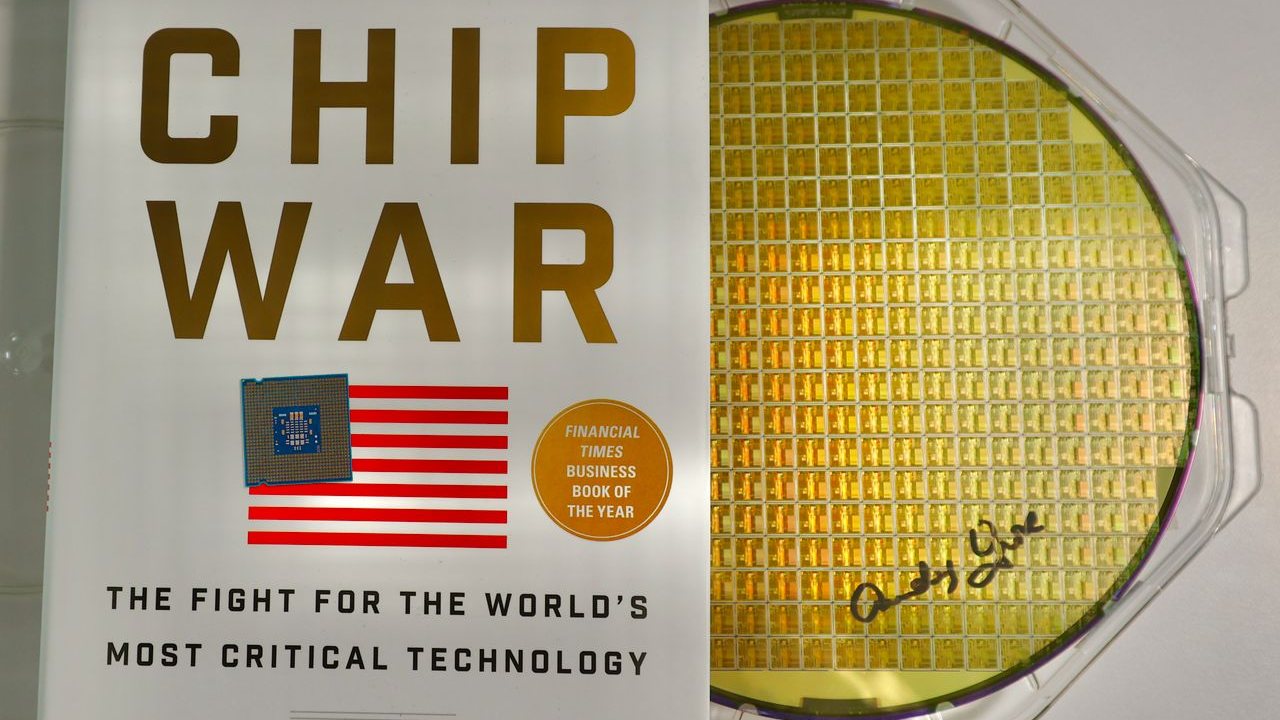
Intel has begun shipping its first volume SoC built on the 18A node, combining RibbonFET gate-all-around transistors and PowerVia backside power delivery, into the notebook market. The strategic weight lies not in the chip itself but in what it signals: the first credible challenge in years to TSMC's near-total grip on leading-edge logic.
For the equipment ecosystem, the implications are concrete. The RibbonFET-plus-PowerVia combination raises process step counts by roughly 30%, lifting demand for deposition, etch, cleaning and inspection tools across every shipment. Suppliers such as ASML, Applied Materials, Lam Research, Tokyo Electron, Disco and Lasertech currently derive 60-70% of advanced-logic revenue from TSMC. Intel's Arizona and Ohio buildout offers a path to push that exposure down—a customer-diversification windfall after years of single-account dependence. Inspection vendors tied to High-NA EUV stand to benefit most as 18A yields scale toward 2026.
For PC OEMs—HP, Dell, Lenovo, and the broader Windows fleet—the calculus is sharper. The market is now a four-way contest: Intel, AMD, Qualcomm's Snapdragon X, and Apple Silicon. If Panther Lake delivers 20-plus-hour battery life in a sub-13mm chassis, Intel regains a defensible position against Arm-based Windows machines in the lucrative commercial segment. But early-lot yield risk is real. Prudent procurement means stockpiling prior-generation Lunar Lake inventory and maintaining an AMD Ryzen AI dual-source line as a genuine BCP, not a hedge on paper.
Materials suppliers are quiet beneficiaries. EUV resist makers, 300mm wafer producers and CMP slurry vendors—a concentrated oligopoly—see per-wafer consumption rise as layer counts grow. Margin expansion, not just volume, is the story here.
The recommended posture for global players: equipment firms should double US field-service headcount and align capex with CHIPS Act sourcing rules; OEMs should run parallel AMD/Qualcomm evaluations and build NPU-native software for the AI PC wave; component suppliers should pre-position inventory near Intel's US, Ireland and Israel fabs. Diversification away from a single Taiwan node is no longer a defensive necessity—it is an active commercial opportunity, and the firms that move first will capture the pricing power that comes with optionality.




