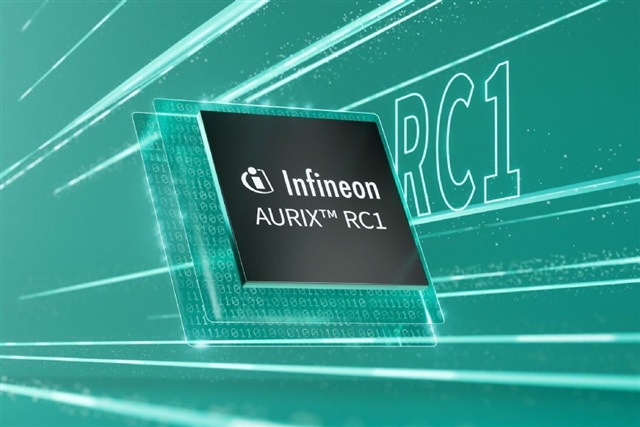
Infineon unveiled AURIX RC1, its first RISC-V-based microcontroller platform, built for a production run exceeding a decade. One instruction set is meant to stretch from tiny controllers to real-time vehicle computers and robotic motion controllers, serving automotive, robotics, and industrial customers at once.
The strategic weight here is not the chip, it is the choice of instruction set in a market that normally avoids risk. Automotive MCUs carry qualification cycles measured in years and support commitments measured in decades, so vendors rarely gamble on an unproven ISA. Infineon putting RISC-V into this tier signals that the open architecture has crossed from cost-driven edge devices into safety-critical silicon. For Arm, whose licensing model underwrites much of the embedded world, a credible second path lets large buyers negotiate harder and hedge against royalty and roadmap dependence.
The real contest shifts to software. A shared ISA across product lines promises reuse of drivers, toolchains, and functional-safety artifacts (ISO 26262), which is where automotive engineering costs actually concentrate. If Infineon can make one codebase span a wiper controller and a motion controller, it compresses development overhead for Tier 1 suppliers. The open question is ecosystem maturity: compilers, debuggers, AUTOSAR support, and certified libraries still trail the Arm incumbency, and fragmentation across RISC-V extensions remains the standing risk.
For Japan, this lands directly on Renesas, a dominant automotive MCU supplier, and on Toyota-centric supply chains that standardize deeply around chosen platforms. A viable RISC-V automotive tier pressures Japanese device makers to clarify their own open-ISA stance rather than treat it as a lab curiosity. It also matters for the embedded engineering base: Japanese Tier 1s and in-house vehicle software teams have accumulated Arm-specific expertise, and a shift raises retraining and toolchain-migration costs.
For Japanese SIers and embedded development shops, the near-term opportunity is advisory and integration work. Porting, safety re-certification, and toolchain validation around a new ISA are exactly the labor-intensive, long-horizon engagements that fit the domestic SIer model. Teams that build RISC-V automotive competence early can position for multi-year platform migrations as OEMs weigh supplier diversification against the comfort of proven Arm-based designs.




