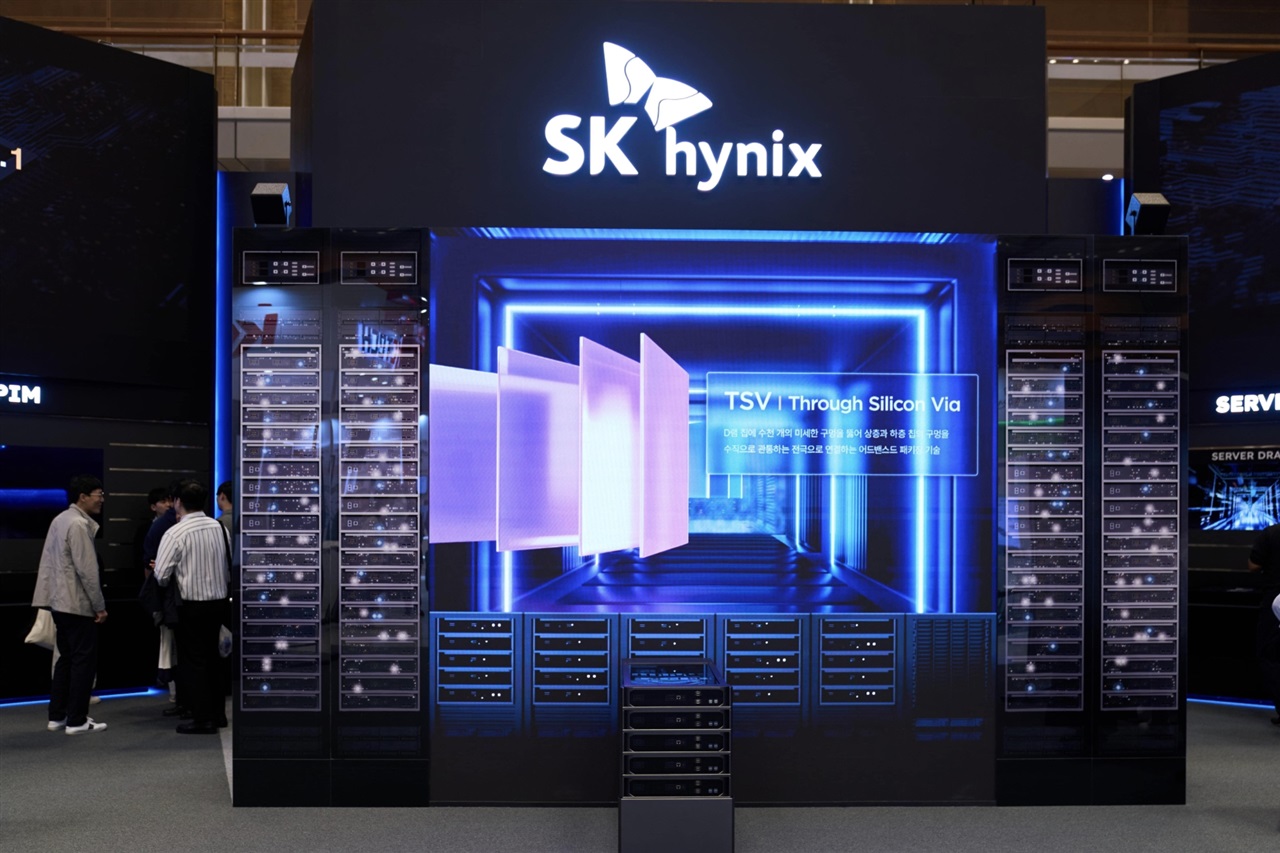
SK Hynix's admission that it can fill less than half of customer demand reframes the AI hardware story. For two years the shortage narrative centered on Nvidia GPUs, but a modern accelerator is useless without the high-bandwidth memory bolted to it. The supply ceiling is now the memory stack, and that ceiling is set years in advance by capex decisions, advanced packaging capacity, and yield on increasingly tall DRAM stacks.
The strategic signal buried in the move toward shorter stacks matters more than the headline number. When a supplier trims stack height, the instinct is to read softening demand. SK Hynix is saying the opposite: customers accept less memory per device simply because more is unavailable. That inverts normal market logic. It means pricing power sits firmly with suppliers through at least the next capacity cycle, and hyperscalers are competing not on price but on allocation. Whoever locks multi-year HBM supply agreements effectively locks their AI roadmap, and latecomers inherit whatever is left.
Globally this hardens a three-player memory oligopoly and raises the stakes on HBM4, where logic-die integration blurs the line between memory maker and foundry. The risk for buyers is concentration: a single fab incident, yield stumble, or geopolitical disruption on the Korean peninsula now gates the entire AI buildout. Expect aggressive prepayments, equity-style supply deals, and vertical moves by cloud providers hungry for guaranteed volume.
For Japan, this is less a threat than a structural tailwind sitting upstream. Advantest dominates HBM test equipment, and taller, more complex stacks mean more test intensity per unit shipped, directly expanding its addressable revenue. Tokyo Electron, plus materials leaders in photoresist, CMP slurry, and bonding films, benefit from every incremental advanced-packaging line the memory makers add. Kioxia and Micron's Hiroshima operations anchor Japan's position in the broader DRAM and NAND supply chain, keeping domestic fab investment relevant to the AI cycle.
The harder conversation is downstream. Japanese data center operators and the SIers building enterprise AI platforms face a procurement reality their planning assumptions have not caught up to. GPU server lead times are increasingly dictated by memory allocation, not chip availability. SIers quoting on-premise AI infrastructure for Japanese enterprises should price in longer delivery windows and volatile component costs, and should steer clients toward hybrid designs that lean on cloud capacity for burst workloads rather than betting on timely hardware delivery. For RPA and automation vendors moving toward agentic, LLM-backed products, the lesson is that inference economics are hostage to a memory market they cannot influence, making efficient model sizing and smart workload placement a genuine competitive differentiator rather than an engineering afterthought.




