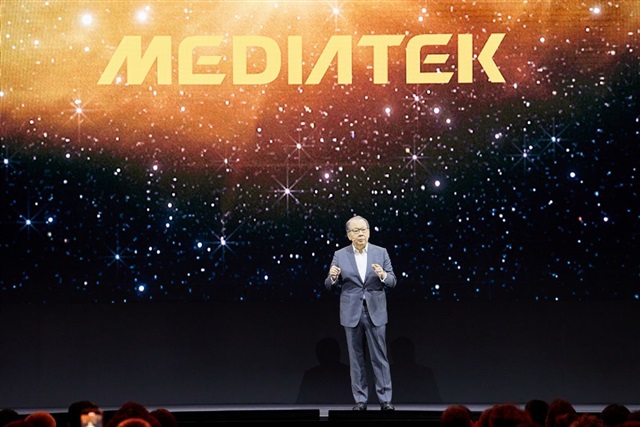
Google is expanding its TPU program and reshaping its supplier base, opening a path for MediaTek as AI-accelerator capacity tightens. The strategic shift is bigger than a Nvidia-versus-Google contest: customer-owned silicon is becoming a bargaining and capacity instrument.
That changes the competitive map. Nvidia remains powerful where developers value a mature software stack and broad tooling. TPUs matter even without replacing Nvidia everywhere: Google can tune the processor, compiler, networking and fleet operations around recurring workloads, gaining control over performance, cost and supply. This gives Nvidia a stronger negotiating counterpart and gives other cloud operators a model for commissioning their own accelerators.
MediaTek’s opportunity is larger than a single design win but narrower than an automatic takeover. It must support repeatable production, qualification, packaging coordination and software integration. Investors should watch sustained product cadence and ecosystem adoption, not announcements alone. Custom silicon can diversify capacity while moving dependence from one vendor to a few vertically integrated cloud platforms, making portability and multi-source operations strategic assets.
For Japan, the change creates a more plural compute market. Telcos, cloud operators, financial institutions and manufacturers will have more reason to evaluate services backed by different accelerators rather than treating Nvidia compatibility as the default procurement assumption. That could improve capacity resilience and negotiating leverage, but migration remains difficult when model libraries, performance tuning and operating procedures reflect the original hardware stack. Japanese enterprises should make portability, workload benchmarking and fallback capacity explicit requirements in AI infrastructure contracts.
Japanese SIers and local development teams can capture value in that gap. They can benchmark workloads across GPUs, TPUs and other ASICs, adapt pipelines, add cost and latency observability, and manage governance across clouds. RPA and enterprise-automation programs should avoid hard-coding one accelerator path into production. Japan’s semiconductor ecosystem may also benefit from broader qualification, but only suppliers that prove repeatability and integration discipline will convert it into durable business. The near-term prize is owning migration and operations around fragmented AI compute.




