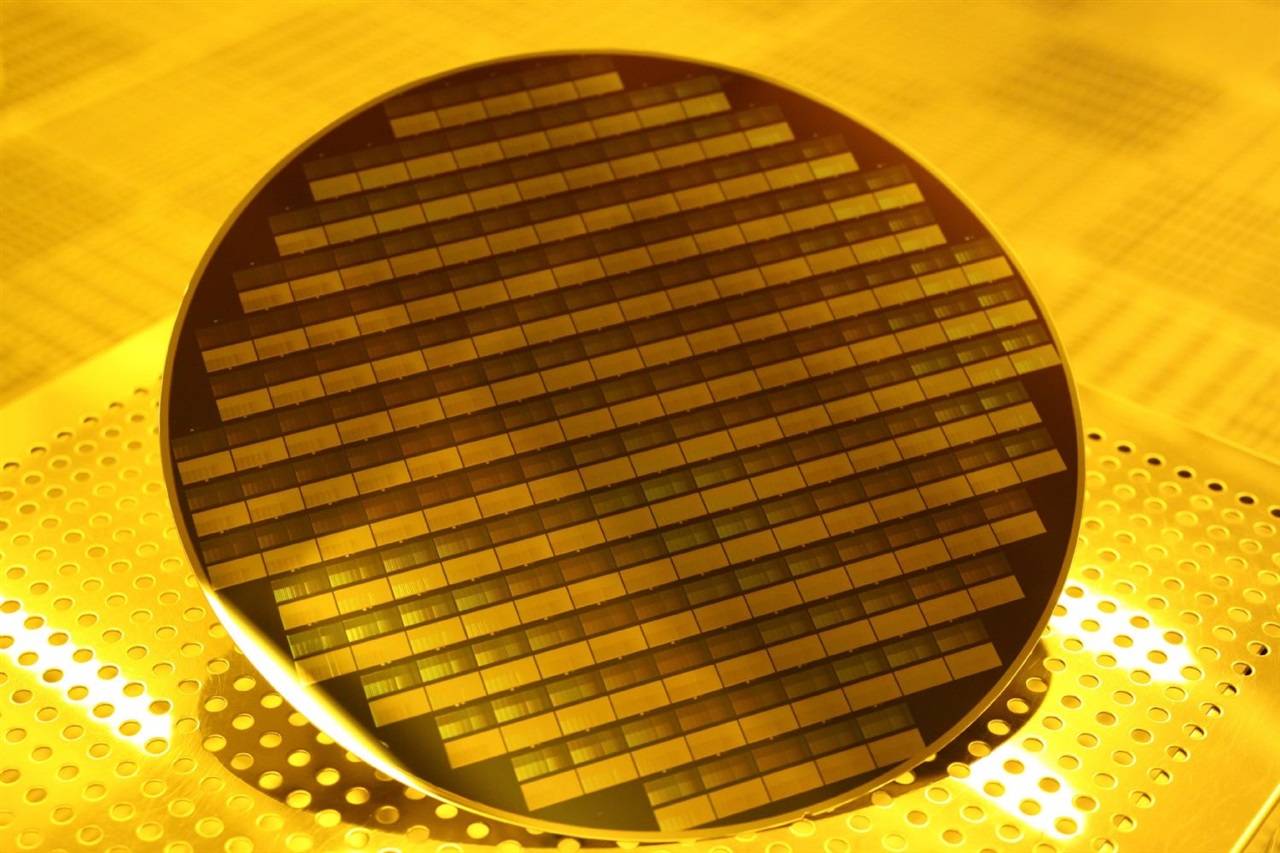
Two GaN fab commitments landed from opposite ends of the industry. India's Spintronics AI is weighing a roughly $294 million gallium nitride fab in Ujjain, Madhya Pradesh, while Infineon is putting around €1.1 billion into what it calls the first high-volume 300mm GaN line at Villach by 2034, with €319 million in EU support. Read together, they signal that GaN is graduating from a niche in fast chargers and RF into a contested mainstream power platform.
The strategically decisive move here is Infineon's. Shifting GaN from 150/200mm onto 300mm wafers is the same cost lever that reshaped silicon logic economics — it drives down per-die cost at volume and raises the capital bar for everyone else. That is a direct threat to the many pure-play GaN startups whose entire pitch rests on being cheaper and faster than incumbents. Once a top-tier IDM industrializes GaN at 300mm with public co-funding, the window for subscale entrants to win on price narrows sharply.
Spintronics AI's plan belongs to a different logic. India's fab ambitions are driven by sovereignty and the India Semiconductor Mission's subsidy pool, not near-term cost leadership. A sub-$300M fab will not out-engineer Infineon, but it plants domestic capability and courts state incentives — a pattern now repeating across subsidized geographies, which collectively add structural oversupply risk to the GaN roadmap this decade.
For Japan, this is the uncomfortable part. Japanese power-semiconductor leaders — Rohm, Toshiba, Mitsubishi Electric, Fuji Electric, Renesas — built commanding positions in SiC and legacy power silicon, but their GaN volume scaling lags Infineon's 300mm trajectory. Japan holds deep GaN IP (Amano's Nobel-winning work at Nagoya), yet commercialization has been slow to convert that lead into fab-scale output. If Infineon locks in the GaN cost curve while subsidized Indian and Chinese capacity floods the low end, Japanese device makers get pinched from both directions.
The counter-move sits upstream. The GaN device race is also a materials race, and here Japan is strong: Sumitomo Electric in GaN substrates and Japanese chemical and equipment suppliers can monetize the global buildout regardless of whose fab wins. For Japanese strategists, the actionable read is to prioritize GaN substrate, epitaxy, and power-module integration tied to AI-datacenter power delivery and EV inverters — the demand that makes GaN worth fighting for — rather than chasing commodity device fabs where the cost war is already being decided elsewhere.




