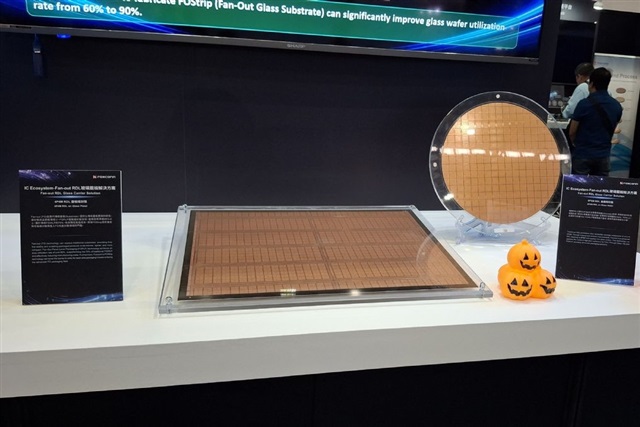
Foxconn has demonstrated roughly 5μm fan-out RDL circuitry aimed at automotive chiplets, edge AI and consumer devices. For global automakers, the opportunity is to combine chips suited to different functions without putting every function on the same advanced process. The competitive question is whether packaging becomes a service they can source separately or part of an integrated supplier relationship that is harder to unwind.
Line width alone cannot answer that question. Automotive adoption depends on thermal behavior, long-term reliability, test coverage and repeatable manufacturing economics. A compact package can lose its cost advantage if defective dies or assembly failures force expensive scrap. Foxconn's demonstration establishes a technical direction, not automotive qualification or commercial yields; buyers should evaluate validated package performance rather than a routing specification.
If Foxconn can pair packaging with broader system integration, it could capture more of the design relationship and make switching suppliers more costly. That creates a sourcing trade-off: fewer interfaces to manage, but more dependence on a single partner. Advanced-packaging diversification also cannot insulate buyers from export controls on dies or equipment. Resilience requires visibility into the complete production chain, not just the final assembly location.
For Japan's automakers and automotive electronics suppliers, the prudent response is joint engineering evaluation rather than an immediate sourcing shift. Candidate designs should be assessed for cooling, lifetime validation, failure analysis and alternative manufacturing routes before they enter a vehicle program. Established suppliers may face pressure to justify the value of their integration work, while new entrants must prove they can support long product lifecycles.
Japanese SIers and development teams have a role in making that evidence usable. Linking die genealogy, package test results and field failures could improve traceability and clarify responsibility across suppliers. Contracts should preserve access to those records and the information needed to qualify alternatives. The likely opportunity is not a quick hardware substitution, but the engineering and data infrastructure that lets buyers adopt chiplets without surrendering control of their supply chain.




