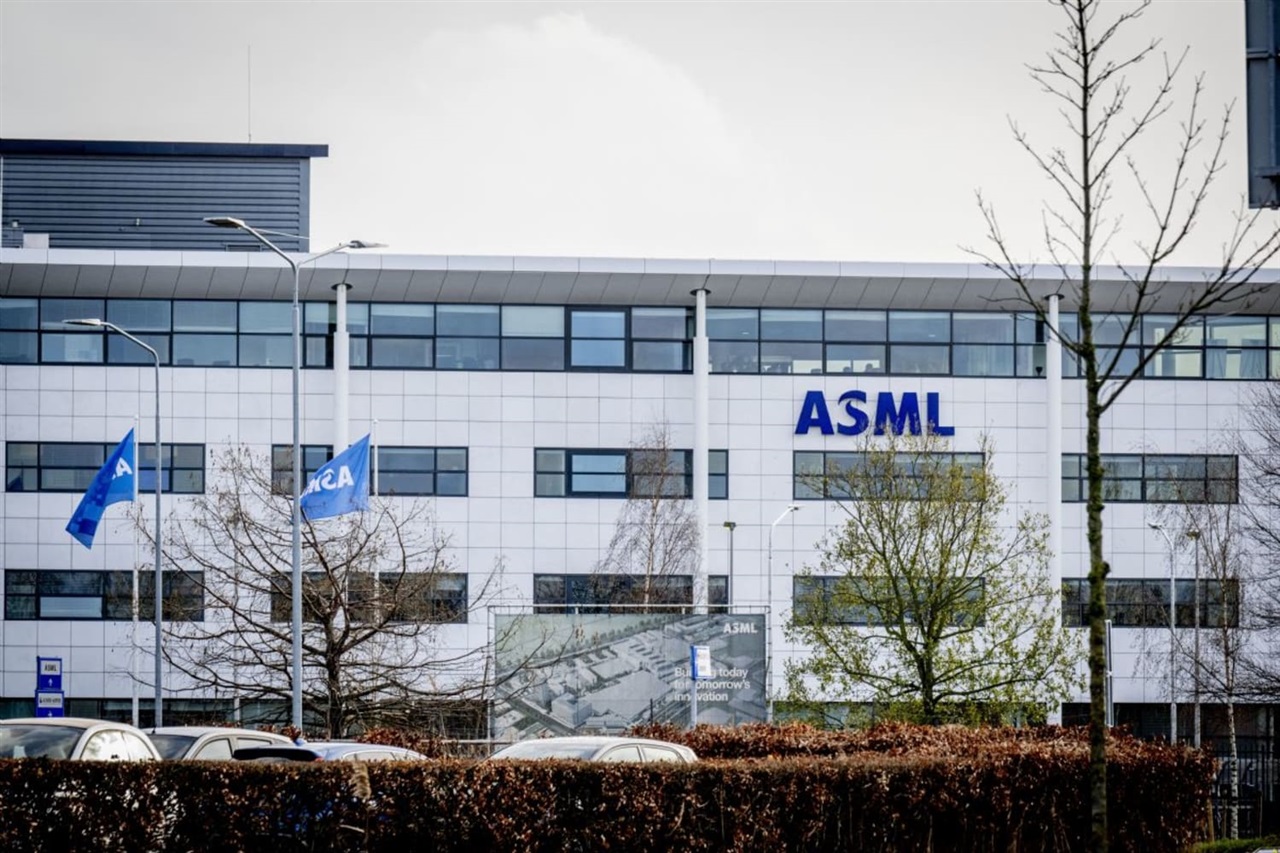
The core development is narrow but revealing: Brussels is exploring a deal to restore a sanctioned German materials supplier in ASML's chain in return for relaxing restrictions on a Chinese entity previously flagged for aiding Russia. The dollar value is trivial; the precedent is not.
What this signals globally is that the Western export-control coalition is no longer a one-way instrument. For three years the US, Netherlands, and allies treated chip restrictions as a lever they could pull without cost. China's rare-earth and materials chokeholds have inverted that logic. By targeting a tiny, hard-to-replace node in ASML's supply web, Beijing demonstrated it can impose asymmetric pain on the crown jewel of European tech without touching the headline-grabbing lithography machines themselves. The negotiation itself is the message: deterrence now runs both directions.
The second-order risk is coalition fragmentation. If the EU trades enforcement on a Russia-linked firm to unblock its own industrial supply, Washington's maximalist posture—embodied in proposals like the MATCH Act to widen DUV curbs—loses credibility with the very partners it needs. ASML's own position sharpens this tension: China still accounts for roughly a fifth of its sales, and the company has openly warned that pushing restrictions further mainly accelerates Beijing's drive to build domestic equipment. Every tightening buys short-term containment at the cost of long-term market loss and a motivated competitor.
For Japan, this is a direct strategic warning, not a spectator event. Tokyo aligned its own controls with the US-Dutch framework, exposing Tokyo Electron, Nikon, Canon, Screen, Advantest, and Disco to the same China dependence and the same retaliation surface. Japanese toolmakers carry heavy China revenue and, critically, depend on Chinese rare earths and specialty materials for their own production. The Sindlhauser episode is a template Beijing can replicate against a mid-tier Japanese supplier at any time.
Japanese enterprises, SIers, and electronics manufacturers should treat materials-level supply mapping as a board-level task, not a procurement footnote. The vulnerability sits in obscure single-source chemicals, gases, and magnet inputs—exactly the layer most firms cannot name. Dev and manufacturing teams building hardware roadmaps should assume component availability is now a geopolitical variable, price in dual-sourcing and inventory buffers, and stress-test designs against sudden loss of a single qualified supplier. The era of treating export policy as background noise is over.




