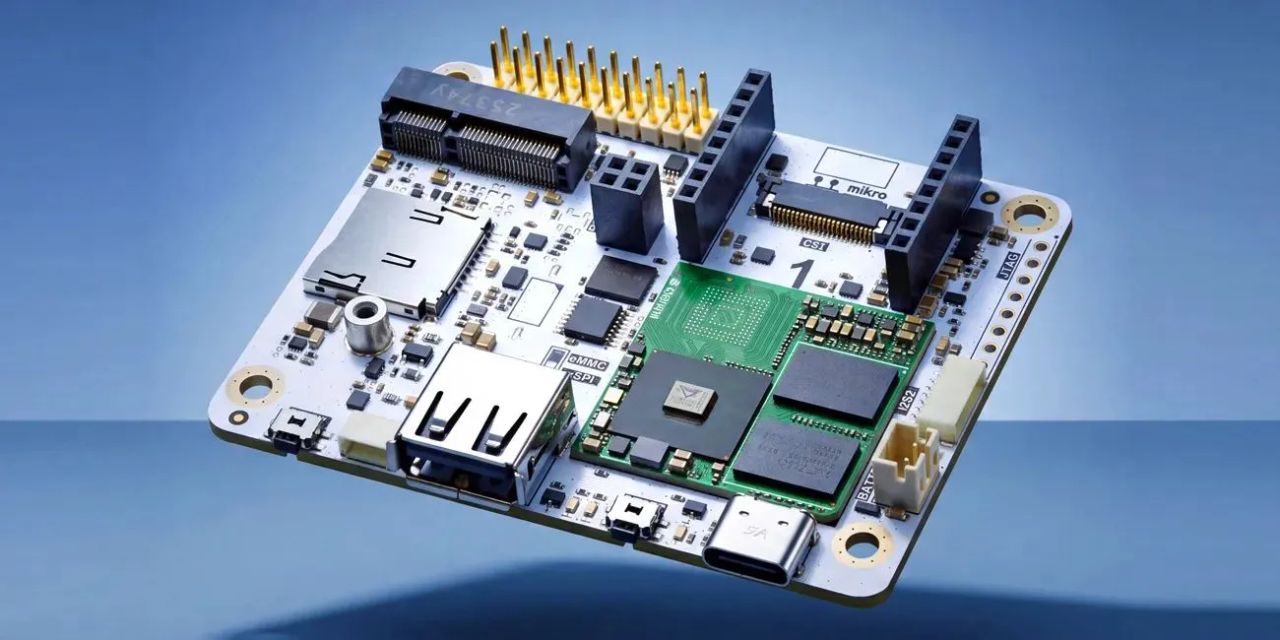
The week's most-read semiconductor items cluster around one theme: a Google-Synaptics push into AI-capable microcontrollers (xMCUs), datacentre CPU demand growing faster than GPUs and custom ASICs, Microsoft stepping back from Nscale's UK datacentre project, interest in NVHBM base dies, and fresh Qualcomm layoffs.
Read together, these are signs of a market recalibrating after two years of GPU-first spending. The xMCU category matters because it moves lightweight inference to the device edge, where power and cost ceilings are tight and silicon volumes are enormous. If CPU demand in the datacentre is genuinely outpacing accelerators, the story is not that GPUs are losing, but that the supporting cast, host CPUs, memory, and the HBM base dies that stitch stacks together, is where incremental budget and margin now sit. Microsoft trimming a specific buildout reinforces the same point: hyperscalers are getting selective about where and when capacity lands, not abandoning AI.
The risk for investors is concentration. Qualcomm's cuts and the scrutiny of datacentre commitments show that even well-capitalized players are pruning. Capital is rotating from headline accelerator purchases toward the quieter layers of the stack, memory, packaging, edge controllers, that determine whether AI workloads are actually profitable to run.
For Japan, this plays to genuine strengths rather than catch-up. Edge microcontrollers and automotive-grade silicon are domestic specialties; Japanese MCU and sensor suppliers are positioned for an xMCU wave if they can add usable on-device AI tooling fast enough. In memory and packaging, Japanese players in HBM-adjacent components and advanced materials benefit directly if base dies and stacking become the contested margin pool. The caution is software: edge-AI value increasingly lives in the SDK and model-deployment toolchain, historically a weaker point for hardware-led Japanese vendors.
For Japanese SIers and enterprise development teams, the practical signal is architectural. A more selective hyperscaler buildout and a CPU resurgence argue against assuming unlimited cheap GPU capacity in planning. Teams should design AI systems that split inference between edge devices and a leaner, CPU-heavy cloud tier, and treat memory and deployment cost, not raw accelerator access, as the binding constraint for the next procurement cycle.




