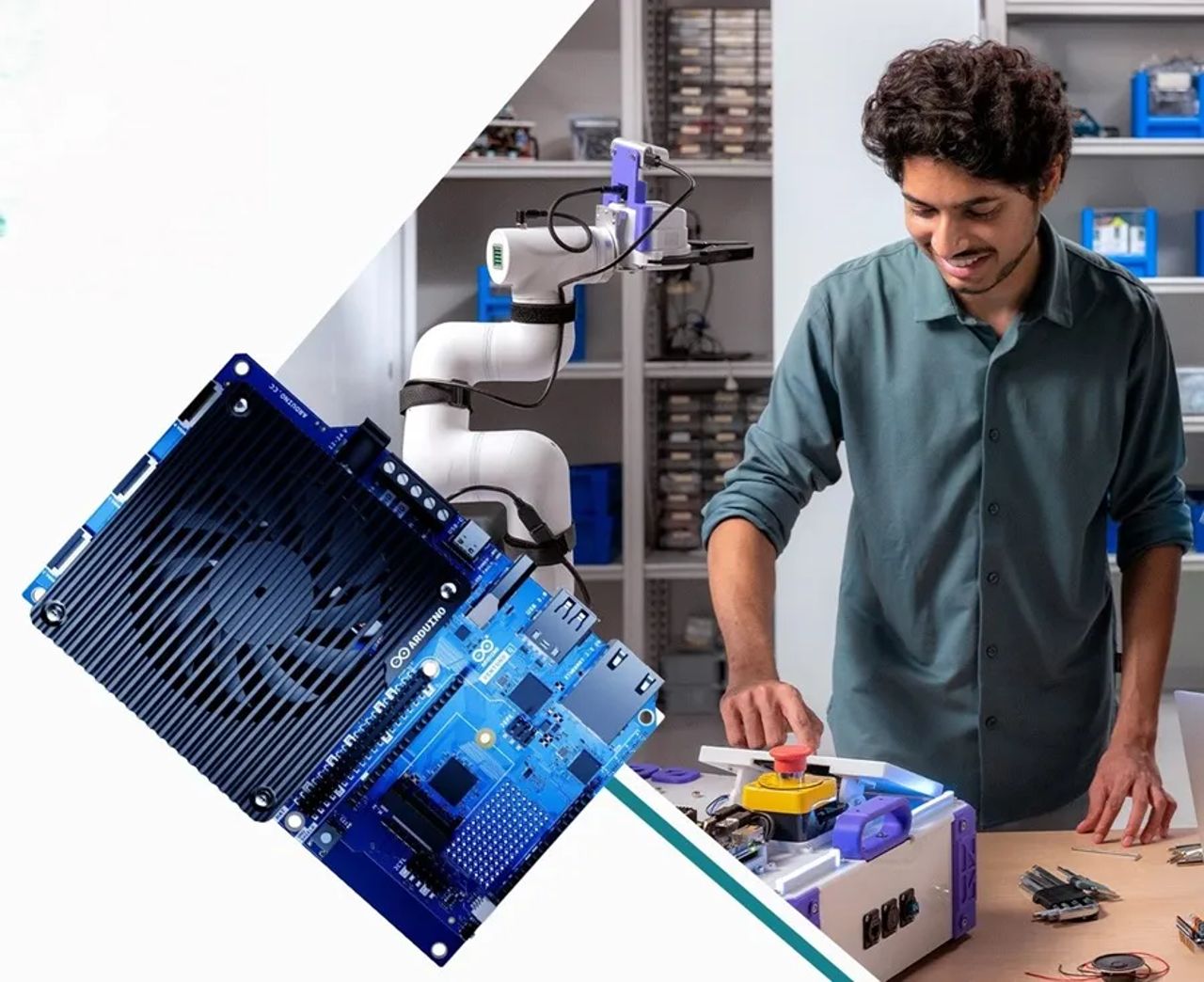
Distributor Transfer Multisort Elektronik recently demonstrated the Arduino Ventuno Q at the Electronica trade show, highlighting a high-performance single-board computer engineered for edge AI, robotics, and deterministic real-time control.
The emergence of dual-architecture developer boards reflects a fundamental shift in how industrial computing is packaged. Historically, building intelligent physical systems required wiring together two distinct hardware paradigms: a general-purpose microprocessor running Linux to handle machine vision or AI inference, and a separate microcontroller or programmable logic controller to manage strict real-time motor actuation. Merging both capabilities onto a single accessible board eliminates fragile communication bottlenecks, lowers component bills of materials, and shrinks physical footprints. For global hardware startups and enterprise R&D labs, this convergence accelerates prototyping cycles while blurring the traditional line between rapid-prototyping hobbyist ecosystems and ruggedized industrial equipment.
Yet this architectural consolidation carries strategic risks for traditional industrial automation vendors. As open ecosystems push further upmarket into deterministic control and localized machine learning, proprietary hardware lock-in becomes harder to justify for mid-tier automation tasks. Engineering leaders must simultaneously weigh the velocity of accessible single-board computers against long-term supply chain longevity, thermal reliability, and industrial cybersecurity certification.
For the Japanese market, where factory automation and robotics remain foundational economic pillars, this trend strikes directly at the division of labor between operational technology and enterprise IT. Japanese manufacturers face an acute shortage of veteran embedded systems engineers fluent in legacy programmable logic controllers, even as demand for AI-driven visual inspection and autonomous mobile robots surges. System integrators in Japan have traditionally segregated cloud-oriented AI software teams from factory-floor hardware specialists. Dual-capability edge boards allow local SIers and corporate engineering divisions to bridge that talent gap, enabling modern software developers to deploy edge inference alongside real-time actuation without overhauling legacy factory networks. Japanese electronics makers and mid-sized manufacturers looking to retrofit aging production lines should view consolidated edge hardware as a practical vehicle for incremental physical digital transformation, bypassing costly monolithic equipment upgrades while keeping sensitive operational data on-premise.




