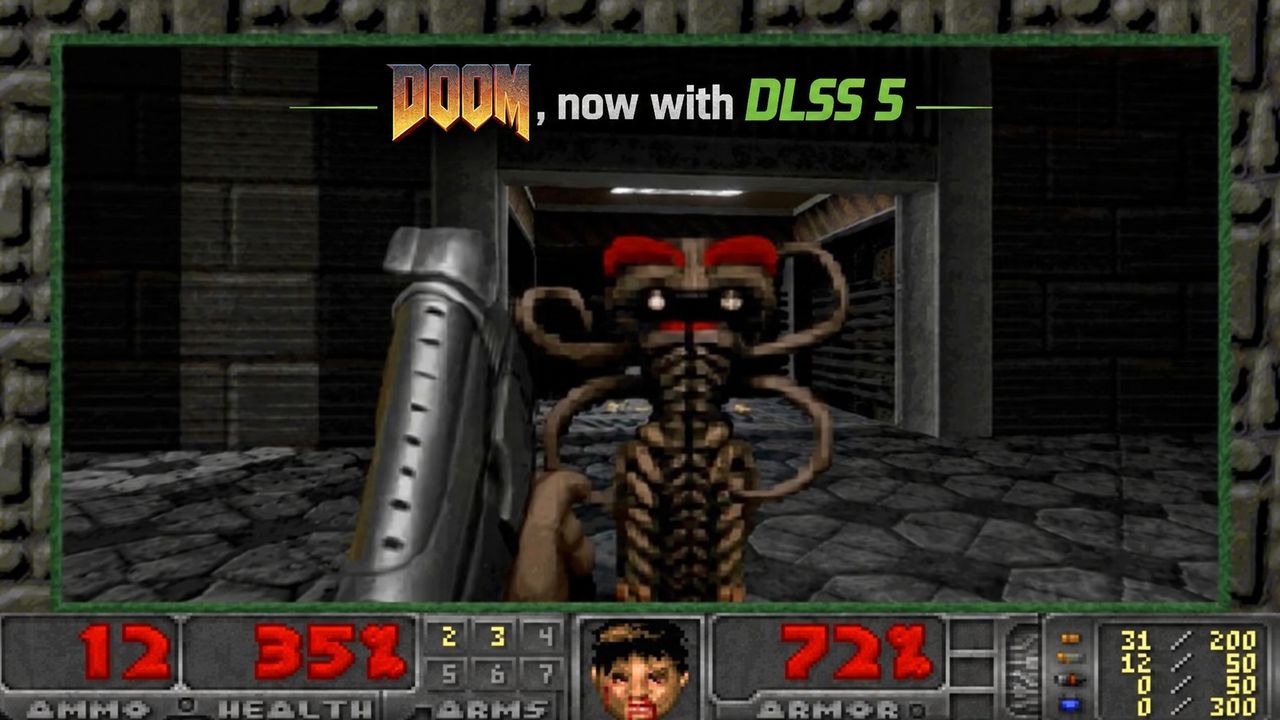
A developer rebuilt the original 1993 DOOM as a 64-bit Windows app on a DirectX 12 path and wired in NVIDIA DLSS 5 neural rendering — not injected into the old binary, but rebuilt so the renderer emits the data the AI pipeline needs.
The stunt is charming, but the engineering lesson is the real story. You cannot sprinkle modern AI onto decades-old software and expect results. DLSS 5 needs motion vectors, depth buffers, and frame history that a 1993 fixed-point raycaster never produced. Making it work meant surgically rewriting the render path to feed the neural model. That is the uncomfortable truth facing every AI-modernization pitch: the value lives not in the model, but in the plumbing that supplies it clean, structured inputs. Legacy systems rarely have that plumbing.
Globally, this maps directly onto the enterprise AI-adoption gap. Vendors sell inference as a drop-in layer, yet most production value requires re-instrumenting the underlying system to generate the signals the model consumes. The compute is cheap relative to the integration labor. That inverts the usual cost assumption and favors teams who understand the old codebase deeply over teams who merely understand the AI.
For Japanese enterprises and SIers, this is the central modernization dilemma in miniature. Vast estates of COBOL, legacy ERP, and bespoke manufacturing control systems sit at the core of Japanese business, and the dominant instinct is to wrap them with an AI or RPA veneer rather than touch the internals. The DOOM port shows why that often fails: without rebuilding how the system exposes its state, the AI layer has nothing meaningful to act on. RPA bots screen-scraping a legacy UI face the same ceiling — they automate the surface, not the substance.
The strategic implication for SIers is a repositioning opportunity. The margin is shifting from reselling AI tooling toward the harder, higher-value work of re-architecting legacy systems to be AI-legible — standardizing data outputs, exposing internal state through APIs, and instrumenting pipelines. Firms that build this retrofit competency, rather than chasing model licenses, will own the durable revenue. For Japan's dev teams, the message is pragmatic: before adopting an AI capability, audit whether your system can even produce the inputs it requires. If it cannot, that gap — not the model — is the project.