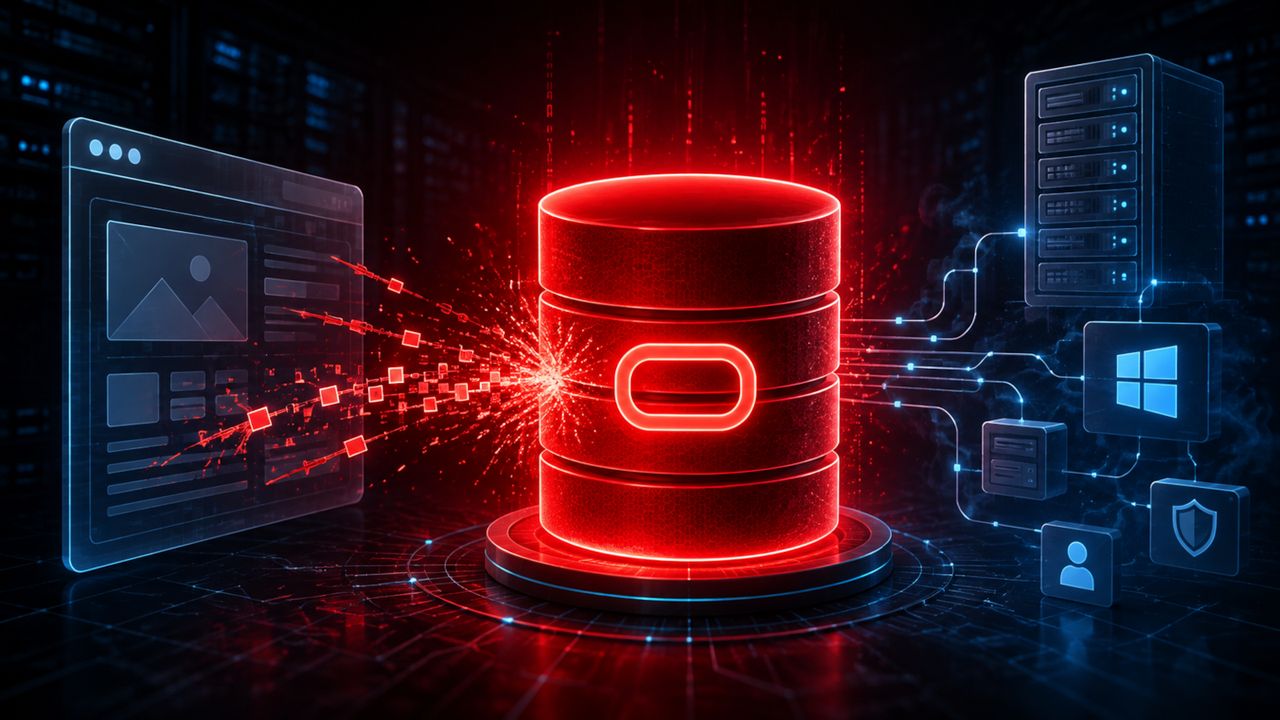
The core development is stark: intruders exploited a SQL injection flaw to plant a post-exploitation toolkit that runs entirely inside an Oracle database, using the DBMS itself as the execution environment for reconnaissance, persistence, and lateral movement.
The strategic significance is not the specific toolkit but the location. For a decade, security spend has concentrated on endpoints and network edges, where EDR agents from CrowdStrike, SentinelOne, and Microsoft Defender live. Databases sit largely outside that telemetry. When an attacker operates through native database procedures and stored logic, there is often no process to flag, no binary on disk, and no outbound beacon that classic tooling recognizes. This is the same logic that made living-off-the-land techniques so effective, pushed one layer deeper into the crown-jewel data store itself.
The blast radius favors the enterprise, not the consumer. Oracle, SQL Server, and PostgreSQL instances underpin financial ledgers, ERP systems, and customer records at nearly every large firm. A toolkit resident in the database has direct proximity to the highest-value data, eliminating the exfiltration hops defenders usually detect. Expect proof-of-concept work to spread quickly to other DBMS platforms, and expect ransomware crews to adopt it because data-layer persistence survives endpoint reimaging.
Opportunities cluster in database activity monitoring and posture management. Vendors like Imperva, Satori, Cyera, and the cloud-native DSPM startups are positioned to capture budget as CISOs discover their SIEM has no meaningful database query telemetry. Cloud providers offering managed databases (AWS RDS, Azure SQL, Oracle Cloud) will face pressure to expose deeper audit primitives, and that gap is a real acquisition and product-differentiation lever.
Recommended actions: treat every internet-adjacent application as a SQL injection candidate and enforce parameterized queries plus least-privilege database accounts, so a compromised app cannot execute administrative procedures. Turn on native audit logging and pipe database query streams into detection pipelines now, not after an incident. Segment database service accounts from OS-level privileges to break the pivot from data layer to host. Boards should ask a blunt question this quarter: does our monitoring see what runs inside the database, or only what talks to it?




