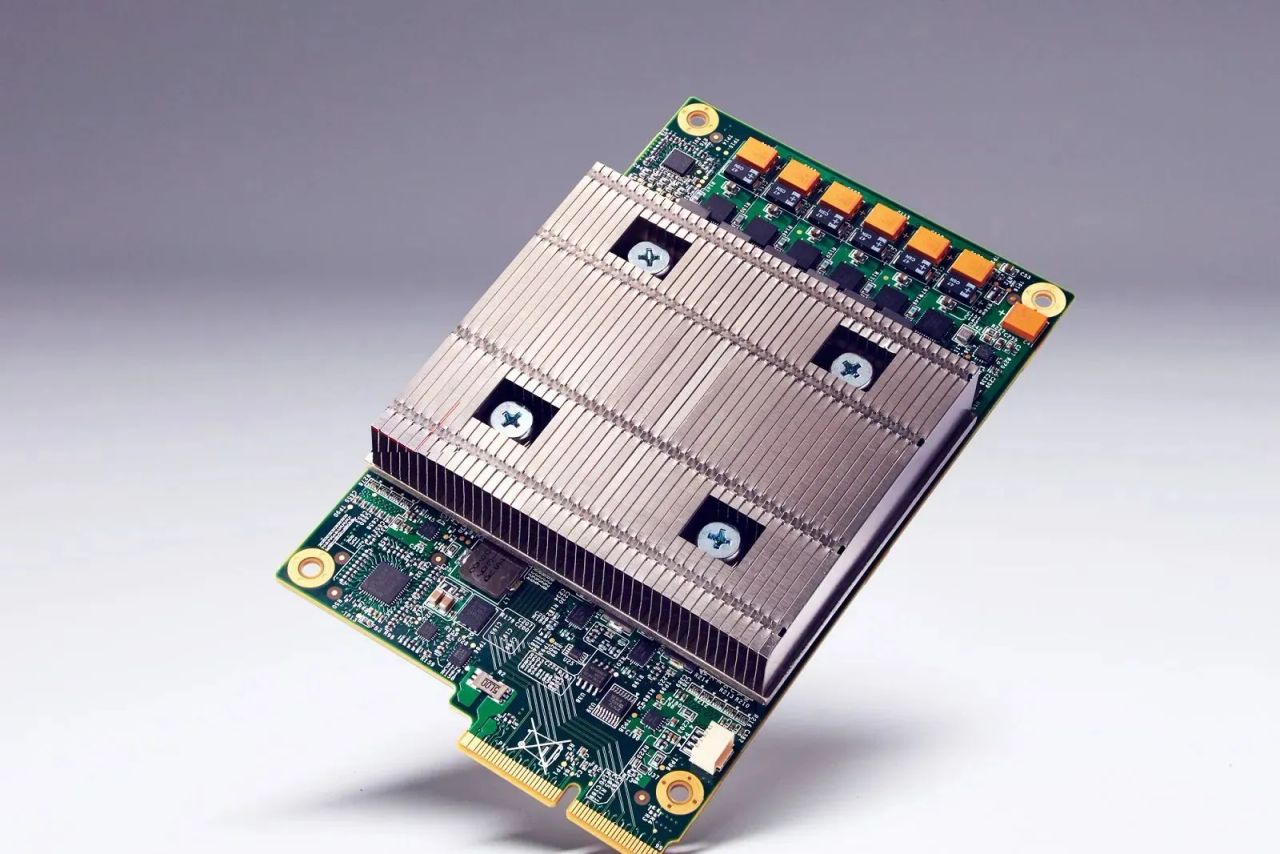
Tenspresso, founded months ago by former Google AI chip engineers, is in talks to raise $50 million at a $500 million valuation, per Bloomberg, with a pitch built around longer context windows. The timing is the story: fresh capital is flowing into inference-optimized silicon at the same moment analysts are warning that the broader chip demand cycle may be about to wobble.
Long context is mostly a memory problem, not a raw-compute one. Holding hundreds of thousands of tokens in play strains memory capacity and bandwidth far more than it strains matrix math, which is why specialized silicon aimed at this workload is attractive. It is also where the risk sits. UBS has flagged that slipping AI datacenter construction could create an 'air gap' in chip demand, pressuring suppliers of high-bandwidth memory, DRAM, and foundry capacity. A startup betting on long-context inference is implicitly betting that inference volume keeps climbing even if training capex pauses and buildouts slip to the right.
For executives, the two signals are in tension. Venture money is underwriting a multi-year thesis about where AI workloads are heading, while the near-term order book that funds the supply chain looks increasingly gated by construction timetables outside any chip designer's control. A company can be right about architecture and still early by a year, which for a $500 million startup is the difference between a breakout and a down round.
For Japan, the exposure is direct. Japanese memory makers, semiconductor materials vendors, and equipment suppliers are deeply levered to the HBM and DRAM cycle that an air gap would hit first, and demand-planning built on uninterrupted datacenter growth now carries more downside. The materials and packaging side may prove more resilient than finished-chip volume, and domestic foundry ambitions should treat demand timing, not just capacity, as the live variable.
For SIers and enterprise development teams, longer context windows reshape architecture choices. Cheaper, higher-capacity long-context inference weakens the case for elaborate retrieval pipelines in some workloads and strengthens it for simply feeding more into the model. Teams should avoid locking into one pattern now; the cost curve that decides between retrieval and brute-force context will move as this class of silicon matures, and the delivery estimates SIers quote clients should reflect that uncertainty rather than assume today's prices hold.




