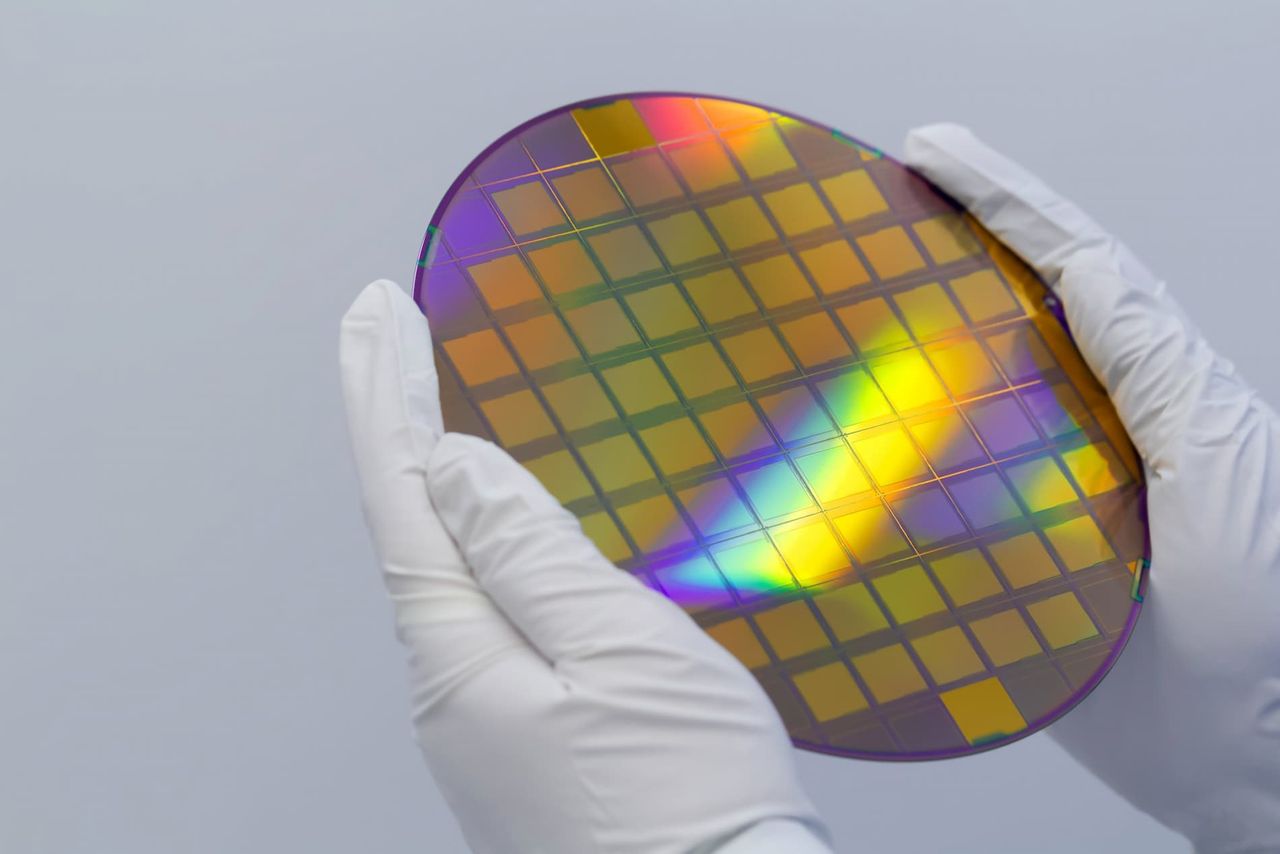
The underlying result is narrow but consequential: a USTC group led by Pan Jianwei and Zhang Qiang pushed quantum frequency conversion from the 393nm ultraviolet band of trapped-ion memories to the 1550nm telecom window, hitting 28.8% end-to-end efficiency while suppressing pump-induced noise to 35 counts per second.
Strip away the physics and the strategic picture is about plumbing. Trapped ions are among the most coherent qubits we have, but they emit at wavelengths that die within meters inside glass fiber. Telecom fiber is engineered around 1550nm. Bridging that gap efficiently, and without drowning the signal in conversion noise, is the unglamorous bottleneck standing between isolated quantum processors and a networked quantum internet. Low noise matters more than raw efficiency here, because a single-photon signal competes directly against stray pump light. This is infrastructure work that determines who can eventually chain quantum nodes across cities rather than demo them on a lab bench.
Globally, the signal is that China continues to invest in the layer most Western programs underweight: not just qubit counts, but the interconnect fabric. The near-term payoff is quantum-secure communication and distributed sensing; the longer arc is modular quantum computing, where networking many small processors beats building one monolithic machine. Expect this to sharpen the policy conversation in Washington and Brussels around quantum export controls and sovereign network buildout, and to feed the 'harvest-now-decrypt-later' threat model that is already pulling forward post-quantum cryptography timelines.
For Japan, the implications are concrete and favorable if acted upon. The country owns genuine strength in exactly the pieces this breakthrough leans on: NTT and university labs in photonics and quantum repeaters, and a world-class fiber and optical-component supply chain. The strategic question for Japanese enterprises and the National Institute of Information and Communications Technology is whether that component edge translates into system-level leadership or stays stuck at parts supply.
For domestic SIers and enterprise IT teams, the actionable layer is not quantum hardware but cryptographic readiness. Financial institutions, telcos, and government integrators should treat long-haul quantum networking progress as a clock on PQC migration, inventorying where long-lived encrypted data and legacy key exchange sit. Firms that build crypto-agility into systems now will absorb the eventual quantum-network era as a routine upgrade rather than a scramble.