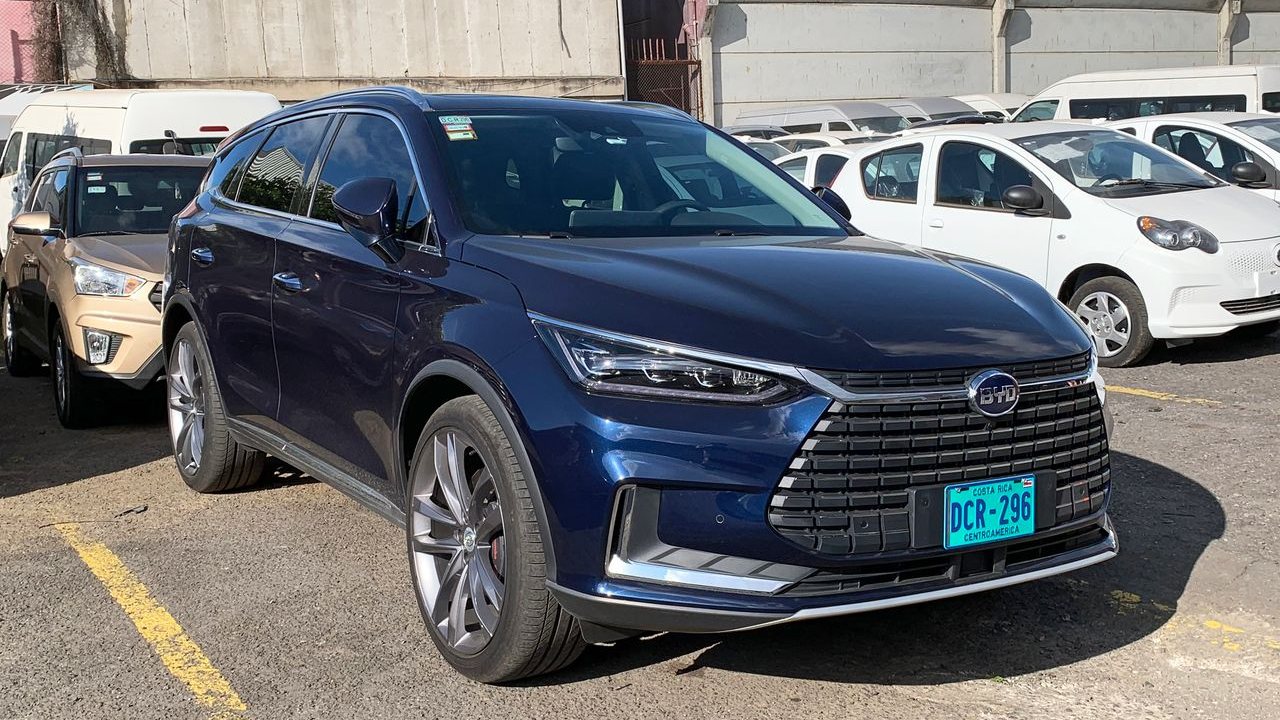
BYD's ramp of a mid-priced EV sedan toward roughly 480,000 units annually does more than add capacity—it sets de facto component standards for Asia's volume EV segment, where Korean suppliers are gaining share fast. That volume rivals legacy global nameplates like the Camry, meaning specs locked in now will propagate across the region for years.
The critical insight is that Korean players such as LG Energy Solution and Samsung SDI are not simply winning on price. Their decisive advantage is cycle time: compressing Chinese OEM qualification to under twelve months versus an industry norm closer to eighteen. In a market where development runs concept-to-production in roughly a year and a half, validation speed is the real moat. Incumbent battery and component makers that cling to multi-year qualification rituals will be structurally locked out, regardless of underlying quality.
Yet defensible territory remains. BYD struggles to internalize high-efficiency SiC inverters, precision reduction gears, and high-speed automotive Ethernet semiconductors. Denso's SiC modules, Nidec's third-generation e-axles, and steer-by-wire systems retain genuine pull, and Nidec's existing motor supply to BYD's premium Yangwang line offers a credible bridge into mid-tier platforms. The strategic test is whether suppliers can convert premium-tier credibility into volume-tier design wins before Chinese internalization closes the window.
The organizational barrier matters more than the technical one. Suppliers raised on keiretsu-style relationship selling are mismatched against Chinese OEMs' development tempo. Winning requires R&D centers in Shenzhen, Shanghai, and Hefei with real decision authority—front-loaded engineering embedded at the concept stage, not bids submitted after specs are frozen. Sumitomo Electric and Aisin have started; few have delegated enough.
For executives and investors, three moves stand out: dedicated task forces for the top Chinese EV makers (BYD, Geely, Chery); doubling local homologation engineering headcount; and differentiating in software-adjacent zones—OTA, cybersecurity, vehicle networking—where Korean suppliers remain thin. The broader signal for global Tier-1s is that EV component competition has shifted from cost arbitrage to speed-and-software integration, and the suppliers who reorganize around local velocity will define the next decade's bill of materials.




