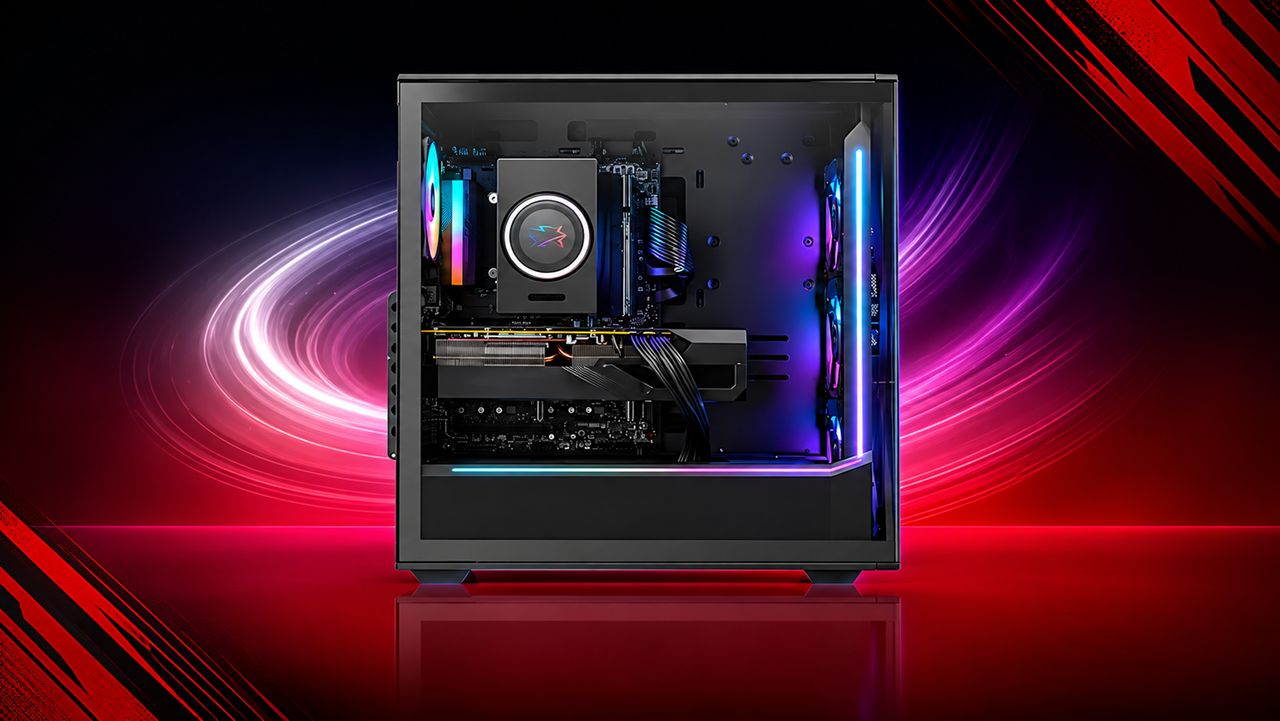
A promotional $500 discount drops iBUYPOWER's Slate, pairing an RTX 5060, Ryzen 5, 16GB of DDR5 and a 1TB SSD, to $899. The headline comparison to Valve's Steam Machine matters more than the deal itself.
The strategic signal is that entry 1080p gaming on current-generation hardware is sliding toward a sub-$900 price point for complete, warrantied systems. For most of the past two years, GPU scarcity and inflated bundle pricing pushed first-time buyers toward consoles or handhelds. A prebuilt at this level narrows that gap and reframes the buying decision: an upgradeable Windows box with a discrete GPU now competes directly with fixed-spec living-room hardware. That pressures console attach economics and complicates Valve's positioning for a device meant to anchor the low end.
The mechanism worth watching is channel inventory. Aggressive retailer markdowns on a brand-new GPU tier usually indicate soft sell-through or a push to clear stock ahead of refreshes, not structural price cuts from Nvidia or AMD. Executives should read one retailer's discount as a tactical event, not a durable floor. The durable trend is that system integrators are competing on total build value rather than component margin, which compresses the premium that boutique builders once commanded.
For Japan, the calculus is harder. A weak yen keeps imported GPUs and prebuilts structurally expensive, so US clearance pricing rarely crosses the Pacific intact. Domestic BTO vendors, who dominate the local configure-to-order market, face a squeeze: buyers see US headline prices online, then confront yen-adjusted shelf prices that can run materially higher. Expect local builders to defend share through service, financing and bundled support rather than matching dollar pricing.
For Japanese development and creative teams, the more relevant read is on workstation procurement. As consumer RTX 5060-class machines commoditize, the price-performance anchor for entry GPU compute, local model inference, CUDA prototyping and content pipelines drops with it. SIers and in-house IT should treat this tier as a cheap experimentation layer for on-device AI workloads before committing to datacenter GPU spend, while budgeting for the yen premium that will persist regardless of overseas promotions.




