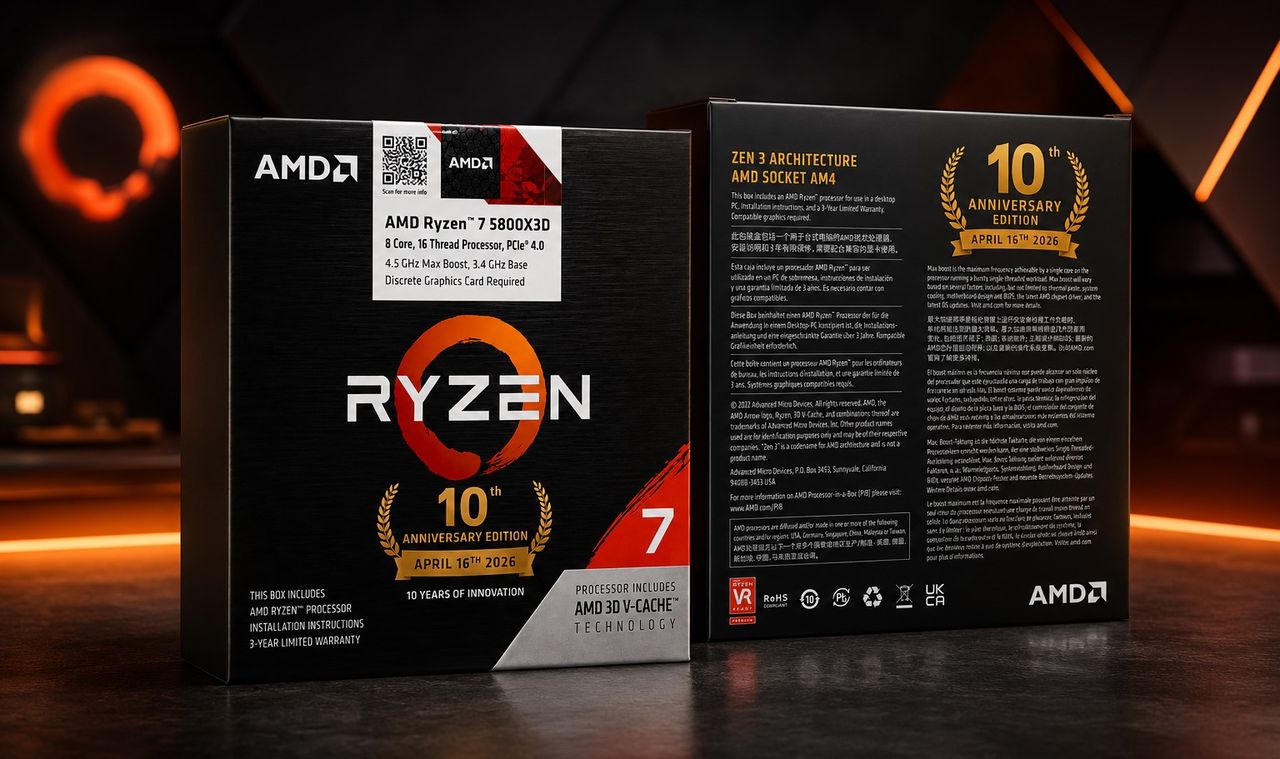
A quick note before the analysis: the supplied article is a hardware pricing story about AMD's Ryzen 7 5800X3D, not the US midterm/data-center policy item flagged in the brief. I am analyzing the story actually provided and will not manufacture a political angle it does not contain.
The real signal is strategic, not promotional. AMD reintroduced a three-year-old CPU and is now discounting it below its relaunch price, which tells you the demand sits in cheap, drop-in upgrades rather than new builds. The 3D V-Cache design lets an aging AM4 socket stay competitive in gaming without a new motherboard or DDR5 memory. AMD gets to monetize the long tail of a platform it has already paid to develop, while quietly delaying the forced migration to AM5 that squeezes budget buyers. That runs against the usual industry reflex to push customers onto the newest platform, and it reframes the upgrade decision as keep-your-board economics.
For the wider market this matters in two ways. It keeps pressure on Intel's mainstream desktop pricing, where a sub-$300 gaming part with a free bundled component is hard to answer. It also normalizes the idea that a well-chosen older chip can be a deflationary asset: buyers wait, prices fall, and the performance gap to new silicon stays small enough to ignore for most workloads.
For Japan, the lens is different from the US sticker price. A weak yen means an imported CPU priced near $279 abroad lands meaningfully higher at domestic retail once import and channel markups are applied, so the headline discount compresses by the time it reaches Akihabara shelves or BTO configurators. That strengthens the case for Japan's active used-PC and parts-resale market, where AM4 components already circulate heavily, and for DIY builders who value a no-new-platform upgrade amid rising component costs.
For Japanese enterprise IT and SIers the direct relevance is limited, since this is a consumer gaming part, not server or workstation silicon. The transferable lesson is lifecycle discipline: platform longevity and socket compatibility reduce total cost of ownership far more than raw per-generation performance. Procurement and refresh planning that favors long-lived, upgradeable platforms, rather than chasing each new socket, is the enterprise analogue of what AMD is rewarding here.




