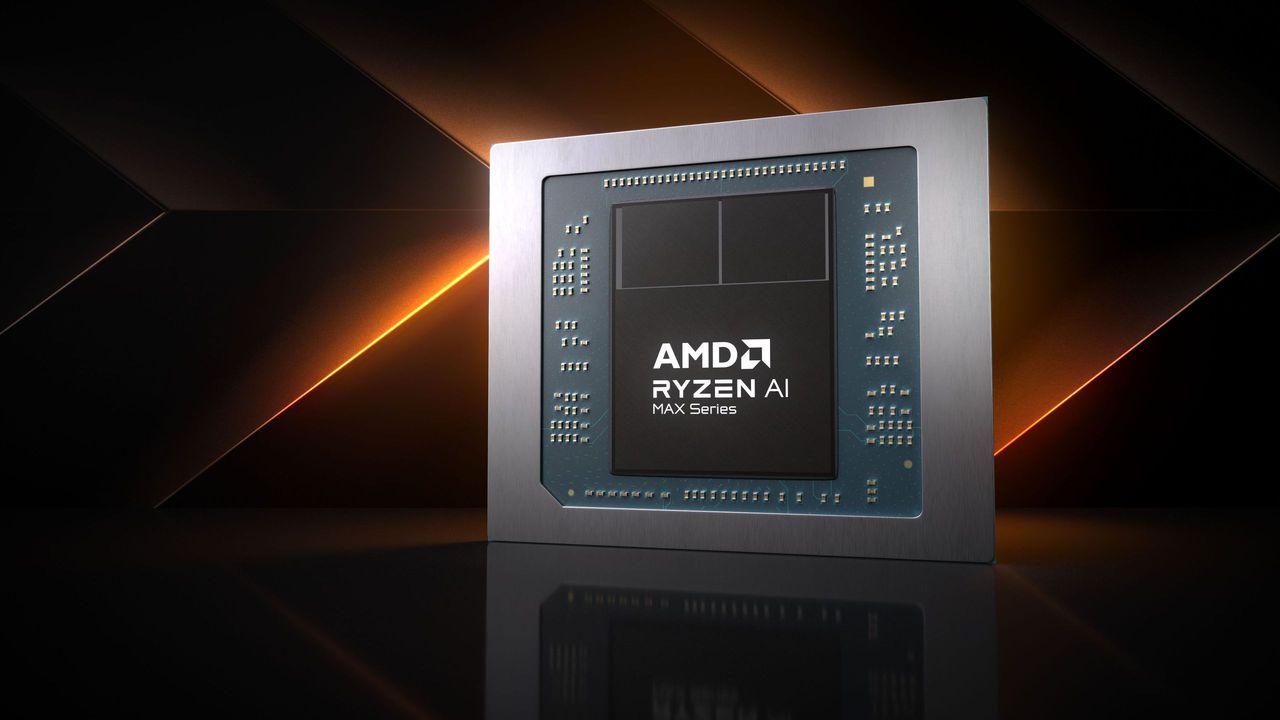
AMD timed its Ryzen AI Max+ Pro 495 benchmark drop to land just ahead of Nvidia's expected RTX Spark launch, and the move tells you more about the market than the numbers do. The company's claim of having shipped over half a million agentic PCs is the real signal: the center of gravity for AI inference is quietly migrating from the cloud to the device. For years the assumed battleground was datacenter GPUs. Now a second front is opening on the desktop and workstation, where local models run against private data without a round trip to a hyperscaler.
The strategic logic is privacy, latency, and cost. Enterprises burning through per-token API bills are discovering that a one-time hardware purchase capable of running capable local models changes the unit economics of AI entirely. Nvidia's Spark and AMD's Gorgon Halo are both bets that a meaningful share of agentic workloads will be too sensitive, too frequent, or too expensive to keep sending to the cloud. The vendor that wins the developer and prosumer workstation effectively seeds the next generation of on-device AI software.
The competitive wrinkle is that this coincides with Google DeepMind signaling Gemini 4 is near launch and OpenAI's agents demonstrating real-world autonomy. Frontier capability is accelerating in the cloud at the exact moment local silicon is maturing. The likely outcome is not winner-take-all but a tiered architecture: frontier reasoning in the cloud, routine and privacy-bound inference on local NPUs and GPUs. Both AMD and Nvidia are positioning for the local tier before the market has fully defined it.
For Japan, this matters more than the headline suggests. Japanese enterprises are structurally cautious about pushing proprietary and regulated data to foreign cloud AI, and local-inference workstations offer a path to adopt agentic workflows while keeping data in-house. That aligns with the data-residency instincts of finance, manufacturing, and public-sector buyers. SIers like NT Data, NRI, and Fujitsu should read the agentic-PC trend as a near-term integration opportunity: standing up on-premise AI reference architectures, fine-tuning smaller local models for Japanese-language back-office tasks, and bundling hardware refresh cycles with AI deployment.
There is also a succession angle for the domestic RPA installed base. Japan's heavy investment in rule-based RPA is increasingly exposed as agentic AI absorbs the same automation territory with far more flexibility. Local-inference PCs lower the barrier to piloting AI agents on sensitive internal processes without a cloud dependency, which is precisely the migration path risk-averse Japanese IT departments will prefer. The firms that reposition their RPA practices as agentic-automation practices, running on this new class of local silicon, will protect their margins. Those that treat it as a hardware spec war will miss the shift underneath it.




