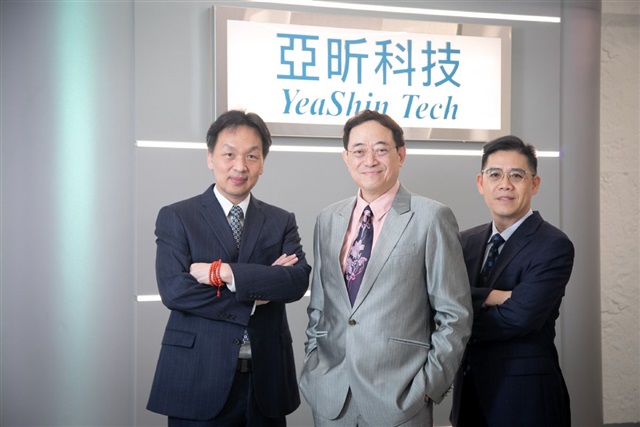
Yea Shin Technology, an Eris Technology subsidiary, will list on Taiwan's emerging market on October 23 and plans to lift 6-inch wafers above half its output from 35%, as its transient-voltage-suppressor products enter the AI server supply chain.
The headline race in AI hardware is about GPUs and HBM, but the margin story increasingly lives in the unglamorous layer underneath: power integrity. An AI rack draws far more current and switches far faster than a conventional server, which turns transient spikes and electrostatic events from a reliability footnote into a design-critical problem. Every incremental watt and every nanosecond of switching stress raises the bar for TVS and ESD components that protect expensive silicon and high-speed interconnects. That is why a small-cap specialist can suddenly command pricing power and justify a capacity shift to larger wafers, where yield economics and higher-spec parts favor premium automotive- and datacenter-grade output.
The strategic read for investors is that AI capex is broadening, not narrowing. The same buildout driving Nvidia and the hyperscalers is now pulling demand down into discretes, passives, and protection devices, a tier historically treated as commoditized. Expect consolidation pressure, qualification bottlenecks, and a scramble for second sources as system builders de-risk away from single suppliers. The winners will be firms that convert a cyclical demand spike into locked-in design wins inside reference server platforms.
For Japan, this is a direct opportunity rather than a spectator event. Japanese makers hold genuine strength in power semiconductors, discretes, and the passive component ecosystem, precisely the categories AI servers are now consuming at scale. The question is whether they move fast enough on datacenter-grade qualification, where Taiwanese and US rivals are already embedding themselves in design cycles. Slow sampling and conservative capacity planning would cede a structurally growing socket to faster competitors.
For Japanese SIers and enterprise infrastructure teams, the lesson is to treat power and protection as first-class design variables when speccing on-prem AI clusters. Thermal and GPU availability dominate procurement conversations today, but transient protection, component sourcing risk, and long-lead qualification increasingly determine real-world uptime. Teams that build supplier diversity and power-integrity review into their AI infrastructure roadmaps now will avoid the reliability and availability surprises that surface once these systems run at sustained load.




