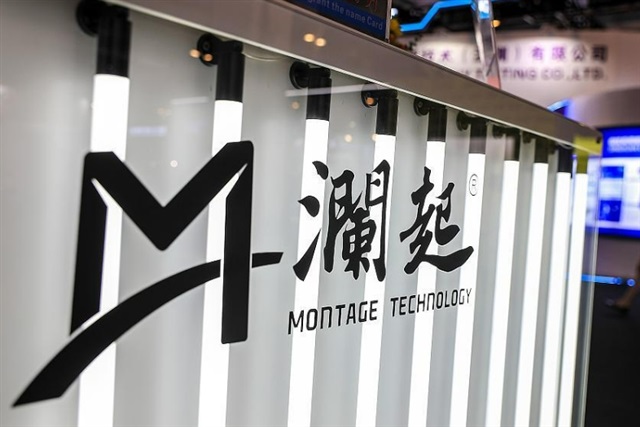
Montage Technology is accelerating DDR5 interface-chip shipments and expanding into MRDIMM, PCIe and CXL as AI-server demand rises; US governors are seeking federal AI rules while preserving state protections.
That combination points to a strategic shift: regulation is becoming an input into server architecture, not merely a legal review after deployment. A federal baseline could reduce duplicated compliance work and give operators more confidence to commit to large infrastructure programs. Continued state-level authority, however, could produce different expectations for deployment, data handling and oversight. Enterprises may then favor infrastructure that can be segmented, audited and moved between operating environments without redesigning the entire stack.
For interconnect suppliers, this makes product breadth strategically valuable. DDR5 interface chips provide exposure to memory expansion, while MRDIMM, PCIe and CXL extend that position toward higher-level server connectivity. The opportunity is not simply to sell more components as AI capacity grows; it is to become part of repeatable server architectures that can be configured for different performance, procurement and compliance requirements. The risk is that a broad catalog without strong platform qualification creates additional integration work rather than reducing it. Buyers will increasingly evaluate interoperability and lifecycle flexibility alongside raw specifications.
For Japanese enterprises, the implication is a procurement question as much as a semiconductor question. AI infrastructure plans should avoid locking critical workloads to one memory or I/O configuration before regulatory expectations become clearer. Reference architectures should include replaceable components, documented performance boundaries and a migration path across server configurations. In Japan’s SI-led enterprise market, this gives integrators room to package infrastructure resilience as an operating capability rather than a one-time hardware selection.
Japanese SIers and local development teams should also connect infrastructure decisions to application portability. RPA and internal automation teams can avoid hard-coding workflows to a single model endpoint or deployment location, while developers can benchmark memory-intensive inference and tool-using workloads across portable interfaces. That approach turns policy variation into a configuration challenge instead of a full application rewrite. The companies best positioned for an uncertain AI buildout will be those that link regulatory choices, server design and software portability into one planning discipline.




