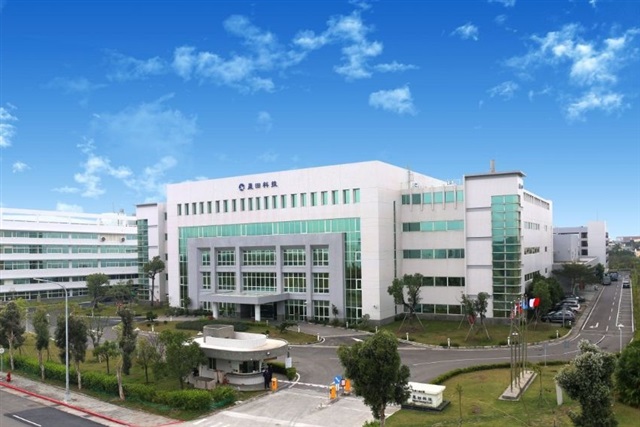
Magnate Technology, a Taiwan-based precision components maker, projects revenue of nearly NT$2 billion (US$61.5 million) in 2026 and 15-20% growth in 2027, pointing to rising aircraft engine demand and semiconductor equipment orders as the twin engines. The detail worth noticing is not the number but the shape of the business: one supplier straddling jet turbines and chip-tool subassemblies.
That straddle is the real signal as Microsoft, Alphabet and Meta head into an earnings week where investors are openly questioning the payback on AI infrastructure. The capex debate at the top of the stack does not stay at the top. Every dollar of datacenter spend eventually becomes orders for lithography and deposition tools, which become orders for the precision-machined parts inside them. Suppliers at this depth are a leading, unglamorous read on whether the buildout is real demand or inventory optimism. When a components maker is confident enough to expand capacity into 2027, it is implicitly betting the capex cycle holds for at least another year.
The dual exposure cuts both ways. Aerospace recovery and semiconductor tooling draw on overlapping capabilities, high-tolerance machining, exotic alloys, tight quality regimes, so a firm can smooth the notorious chip-equipment cyclicality against the steadier climb of aviation. But concentration in two capital-goods markets means a simultaneous aerospace slowdown and an AI-driven correction in equipment orders would hit from both sides. The 2027 growth guidance is a confidence signal, not a hedge.
For Japan, this is close to home. Japanese industry is unusually exposed to exactly this crossover: world-class jet-engine component work alongside a dominant position in semiconductor production equipment and materials. Japanese suppliers inherit the same upside and the same fragility. If AI ROI skepticism forces hyperscalers to trim or reschedule capex, the pain travels through equipment vendors to Japan's components and materials base within a few quarters, often before it shows in headline chip revenue.
For SIers and enterprise IT teams serving these manufacturers, the opportunity is demand visibility. The firms best positioned to absorb a capex wobble are those that can see order signals early and reallocate capacity fast. That argues for investment in supply-chain data integration, S&OP tooling, and forecasting pipelines, including RPA to connect fragmented ERP and procurement systems that still run on manual handoffs. The strategic lesson for Japanese decision-makers is to treat AI-infrastructure spending not as a far-off US software story but as a direct input to their own order books, and to instrument the business to react before the cycle turns.




